 WritersLock
60 Bullet Journal Ideas for Pages, Spreads, and Trackers
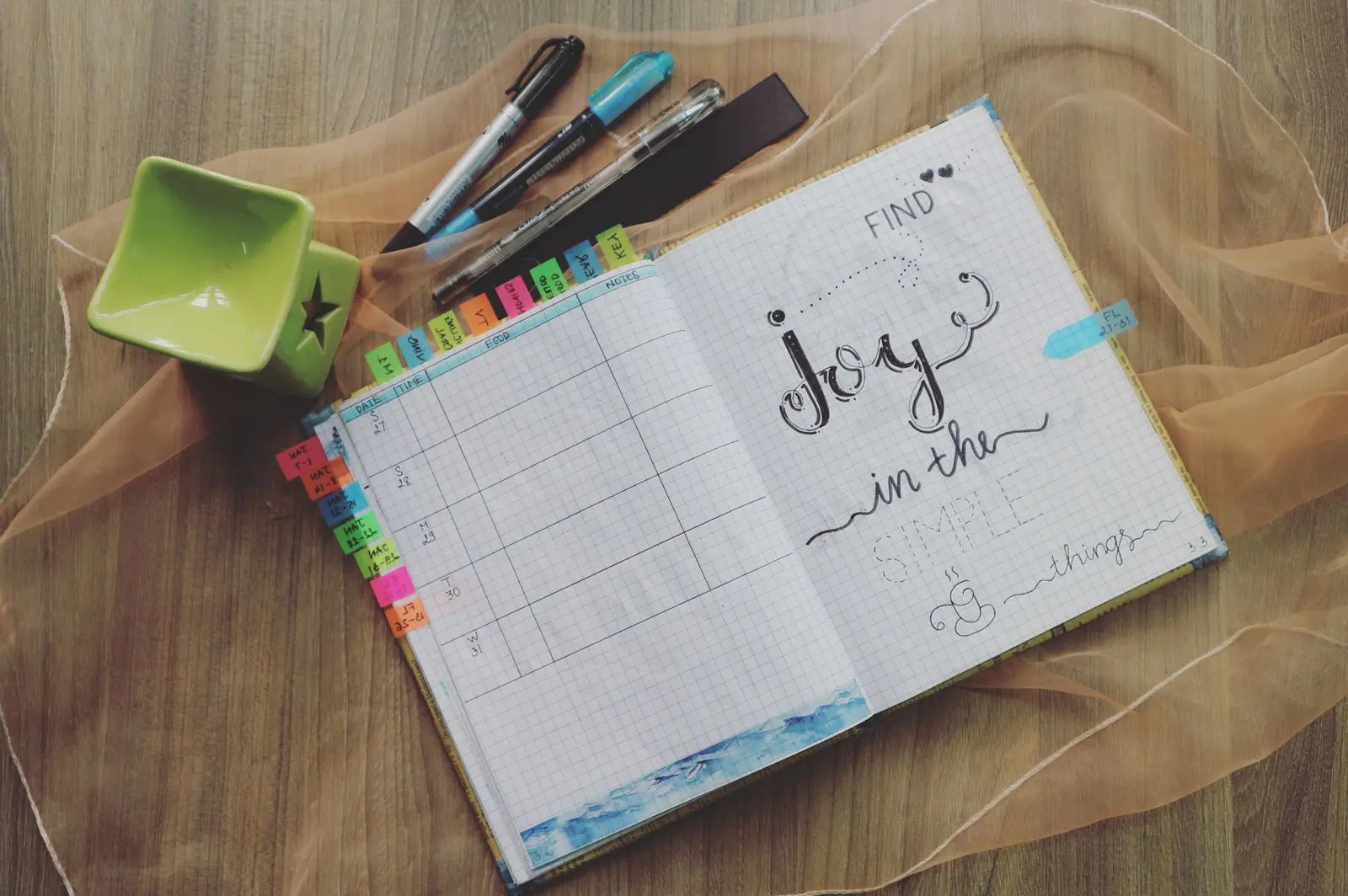
Search "bullet journal" and you get a wall of hand-lettered spreads with watercolor borders and perfect dot grids. Beautiful, and also the fastest way to convince yourself you cannot do this. You can. A bullet journal is meant to be functional first and pretty maybe never. Below are 60 bullet journal ideas sorted by type, from the core logs the system is actually built on to trackers, collections, and one-line minimalist pages for people who hate decorating. Take a handful and start on the next blank page.
What a bullet journal actually is
The bullet journal, or BuJo, was created by Ryder Carroll, a designer who needed a system that worked with the way his attention actually moved. The method is analog on purpose: a notebook, a pen, and a fast shorthand called rapid logging.
Rapid logging means you capture things as short bulleted lines instead of long sentences. Each line gets a symbol:
- A dot for a task
- An X over the dot when it is done
- A circle (or "O") for an event
- A dash for a note
That is the engine. Around it, Carroll's original system uses four core structures:
- Index: a table of contents at the front, so you can find anything.
- Future log: a place for things happening months from now.
- Monthly log: a calendar view plus that month's tasks.
- Daily log: the running list you rapid-log into each day.
Everything else you see online, the trackers and the themed spreads and the elaborate art, is optional decoration built on top of those four things. If you only ever do the index and a daily log, you are bullet journaling correctly.
How to use these ideas (start ugly)
A quick warning before the list. The single biggest reason people quit bullet journaling is that they copy a Pinterest spread, spend an hour on it, and then feel like every future page has to match. The setup becomes the work, the work stops being fun, and the notebook goes in a drawer by February.
So use these ideas the boring way:
- Steal one or two, not twenty. Add a spread when you have an actual need for it, not because it looked nice.
- Draw it with a single pen in five minutes. You can always prettify later. Most people never do, and their journals are fine.
- Let pages be imperfect. A crossed-out box is proof the system is being used, not a flaw.
- Keep the index updated. It is the least glamorous page and the one that makes the whole thing usable.
If you are new to journaling in general, our guide on how to journal covers the wider methods, and the benefits of journaling covers what the habit actually does. This post is the idea bank.
Core pages and logs (the foundation)
Start here. These are the spreads the system is built on.
- Index. Two or three pages at the front, updated as you go, listing page numbers by topic.
- Future log. A grid of the next six months for appointments and deadlines that are too far out for a monthly.
- Monthly log. A calendar or vertical list of the month, with a task list beside it.
- Daily log. The date, then rapid-logged tasks, events, and notes as the day happens.
- Weekly spread. Seven day-boxes across a two-page layout, for people who like to see the week at once.
- Key page. A legend of your bullet symbols and any color codes, so you never forget what a triangle meant.
- Rolling to-do list. One running task list you migrate forward instead of rewriting daily.
- Brain dump page. A no-rules page to empty everything out of your head, then sort later.
Trackers (the most popular BuJo idea)
Trackers turn a habit into a visible row of filled or empty boxes. They are the reason a lot of people fall in love with the system.
- Habit tracker. A grid of habits down the side, days across the top, one box filled per day done.
- Mood tracker. One color per mood, one square per day, a full-month emotional map by the 30th.
- Sleep tracker. Bedtime and wake time logged as a bar, so patterns show up fast.
- Water intake tracker. Eight little cups to fill in per day.
- Habit streak counter. A single chain of boxes for one keystone habit you are trying not to break.
- Exercise or step log. Type of workout and duration, or a weekly step total.
- Expense tracker. Date, item, amount, running total, for a month of real spending.
- Savings tracker. A thermometer or a grid of squares to color in as you hit a savings goal.
- Reading tracker. Books started and finished, with a page for a short verdict on each. Our reading journal prompts are good fuel for that verdict page.
- Screen time tracker. Daily hours on your phone, written by hand, which tends to be a rude awakening.
- Symptom or health tracker. Headaches, cycle, energy, medication, whatever you need to watch over time.
- Gratitude log. One line a day for something you were glad about. Small and quietly powerful.
Collections and lists (the fun, low-effort category)
In BuJo language, a "collection" is any themed page that groups related notes. These are the easiest ideas to start with because a list needs no layout at all.
- Books to read. A running wishlist you add to whenever someone recommends one.
- Movies and shows to watch. Same idea, fewer regrets at 9pm scrolling for something.
- Bucket list. Big and small things you want to do before you run out of runway.
- Places to travel. Cities, trips, day drives, sorted by how far and how soon.
- Gift ideas. Notes on what people mention wanting, so December is not a panic.
- Restaurants to try. With who recommended them and what to order.
- Recipes to cook. Titles and a page number or link, plus a star once you have made it.
- Quotes and lines. Anything you read that you want to keep.
- Wins log. Small victories you would otherwise forget by Friday.
- Ideas parking lot. Business ideas, project ideas, half-thoughts, all in one place.
- Music and podcasts. A list of what to listen to next.
- Wishlist. Things you want to buy, aged on purpose so impulse buys cool off.
Monthly and seasonal spreads
These reset with the calendar and give a bullet journal its rhythm.
- Cover page. A simple month title page to break up the notebook. One word and a line will do.
- Monthly calendar spread. The whole month laid out to plan around.
- Monthly goals. Three to five things you actually want done this month.
- Monthly review. A page at the end to note what worked, what did not, and what to carry forward.
- Seasonal bucket list. Ten things you want out of this summer, fall, winter, or spring.
- Holiday planning spread. Gifts, budget, menu, guest list, all in one place.
- Birthday and anniversary log. A year at a glance so you stop forgetting.
- Year in pixels. One colored square per day for the whole year, a single page that becomes a mood mosaic.
- New year goals or level 10 life. A once-a-year spread reviewing the main areas of your life.
- Semester or school-year spread. Terms, deadlines, and exam dates for students.
Productivity and planning spreads
For work, projects, and the parts of life with deadlines.
- Project planner. Goal at the top, tasks broken down, deadlines beside each.
- Weekly priorities. The three things that matter most this week, written before the busywork.
- Meal plan and grocery list. The week's dinners on one side, the shopping list on the other.
- Cleaning schedule. Which room or task on which day, so nothing piles up.
- Time-block spread. An hour-by-hour column for planning a heavy day.
- Meeting and note pages. A running log for work notes, indexed so you can find them.
- Assignment tracker. For students: class, task, due date, done.
- Bill and subscription tracker. What is due when, plus a note to cancel the ones you forgot about.
Wellbeing and reflection spreads
The reflective side of the practice, which is where a bullet journal overlaps with a written journal.
- Daily reflection lines. One or two sentences at the end of each day about how it went.
- Self-care menu. A list of things that reliably help, for the days you cannot think of any.
- Brain dump for anxiety. A page to offload worries when your head is loud.
- Highlights of the week. Three good moments, captured before they blur together.
- Journaling prompt page. A list of prompts to pull from when you want to write more than a bullet. Our 200+ journal prompts are a ready-made list to drop in here.
- Values or intentions page. A short reminder of what you are actually aiming at this season.
Creative and fun pages
The playful stuff, for when decorating is the point rather than the problem.
- Themed monthly cover. Pick a color or motif and run it through the month's spreads.
- Doodle or lettering page. A page just to practice hand-lettering with no pressure.
- Washi tape and color test page. A swatch page for your pens and tapes, genuinely useful and fun.
- Memory or ticket page. Stubs, receipts, and small mementos taped in as a scrapbook layer.
Minimalist ideas for people who hate decorating
If none of the art appeals to you, good news: the plainest bullet journal is often the most used. These need one pen and no ruler.
- One-line-a-day. A single sentence per day, nothing more. The lowest-effort spread there is.
- Bare daily log. Date, bullets, done. No boxes, no color, no theme.
- Simple monthly list. The days written down the left margin, tasks beside them. That is the whole month.
- Dot-grid ignored entirely. Write in straight lines across the dots and skip the boxes altogether.
The setup is not the habit
Here is the honest part. A bullet journal is a wonderful tool, and for a lot of people the pages themselves are the hobby, which is completely fine. But if what you actually want is not a beautiful notebook, it is a daily reflection habit that sticks, then the elaborate spread is working against you. The hour you spend ruling boxes is an hour you are not writing, and the pressure for the next page to look as good is exactly what makes people stop.
The thing that matters is not a perfect spread. It is a simple entry you actually keep, day after day.
If the setup has become the reason you quit
That is the gap WritersLock is built for, and it is worth being clear that WritersLock is not a bullet journal app. It is a habit app. It locks the distracting apps on your phone until you have written today's entry, so the writing happens before the scroll instead of losing to it. No dot grid, no layout to maintain, just the daily line that a beautiful notebook was supposed to hold and often does not. If you love the analog craft, keep your BuJo and use it. If the setup has become the reason you keep quitting, a plain daily entry you never skip will do more for you than the nicest spread you abandon.
Make the daily entry stickWould rather not draw the grid? Our free habit tracker printable is a month of 31 days across ten habit rows, already ruled. Print it in US Letter or A4 — no email, no signup.
Frequently asked questions
What should I put in a bullet journal?
Start with the four core structures Ryder Carroll's system is built on: an index, a future log, a monthly log, and a daily log where you rapid-log tasks, events, and notes. Once those are running, add collections and trackers only as you need them, for example a habit tracker, a books-to-read list, or a monthly goals page. You do not need all of it at once.
What are good bullet journal ideas for beginners?
Keep it simple. A daily log, a monthly calendar, one habit tracker, and a couple of list-style collections like books to read or a gratitude log will carry you for months. Draw everything with a single pen in a few minutes and resist copying elaborate spreads until the basic habit is solid.
What is the difference between a bullet journal and a planner?
A planner comes pre-printed with dates and layouts you fill in. A bullet journal starts as a blank dot-grid notebook that you structure yourself using rapid logging, so it flexes to whatever you need on any given page. That flexibility is the appeal and, for some people, the trap, since the freedom to design every page can turn into hours of setup.
Do I need fancy supplies to bullet journal?
No. A single notebook and one pen is the entire requirement. The pens, washi tape, and stencils are a hobby layered on top, not part of the method. Some of the most-used bullet journals are plain black ink on plain pages.
Why do people quit bullet journaling?
Most often because the decorating becomes the work. People copy an elaborate spread, spend an hour on it, then feel every future page has to match, and the pressure quietly kills the habit. The fix is to keep spreads plain and fast. If what you really want is a daily writing habit rather than a craft, a simple entry you keep beats a perfect spread you abandon, which is the exact problem an app like WritersLock is designed to solve.
Write first, scroll later
Love the notebook, keep falling off the habit?
WritersLock locks your distracting apps behind a daily writing habit: free journal, dream diary, gratitude log, and a fresh prompt every day.
See how WritersLock worksKeep the spreads plain and the entry daily. WritersLock puts writing ahead of your feeds: write today's lines and your apps unlock. Write first, scroll later.