 WritersLock
72 Vision Board Ideas, and How to Make One That Works
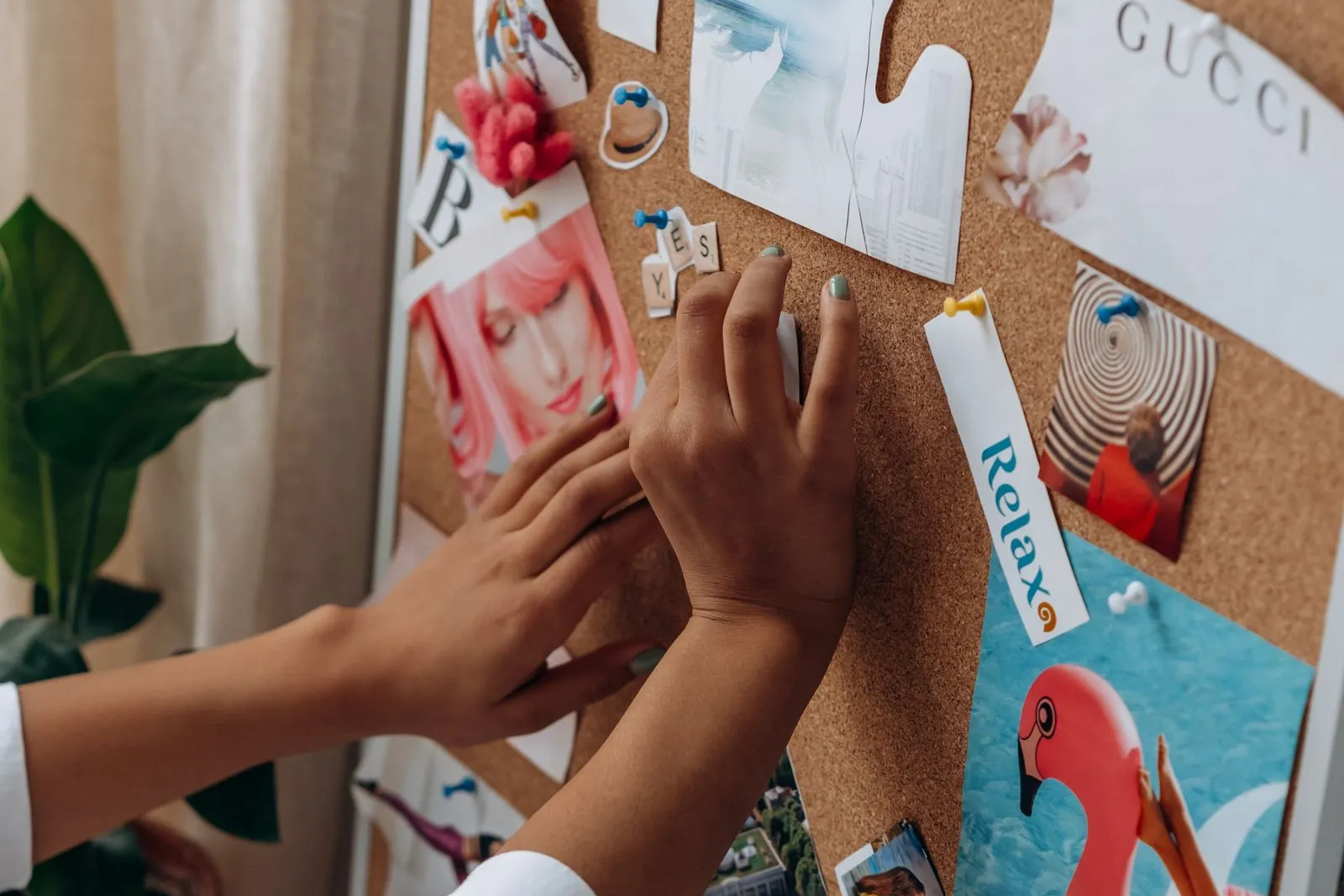
Most vision boards get made in one enthusiastic afternoon and then quietly become wallpaper. That is not because the idea is bad. It is because a board is a picture of a destination, and nobody ever got anywhere by looking at a map. Below are 72 vision board ideas sorted into twelve categories, plus the part almost every guide skips: how to convert the images into plans you will actually follow, and how to check in on them often enough that the board keeps meaning something in March.
What a vision board actually does (an honest answer)
A vision board is a collage of images, words, and objects that represent what you want your life to include. That is the whole mechanism. It is a clarification tool and an attention tool.
Two things it genuinely does well:
- It forces you to name things. Choosing twelve images out of a hundred is a ranking exercise. Most people have never sat down and decided, on paper, what the next year is supposed to be about. Cutting things out makes you do it.
- It keeps the decision visible. Goals fade because the reminder disappears. A board on the wall (or a lock screen) puts the thing you said mattered back in front of you when you are choosing how to spend a Tuesday evening.
And one thing it does not do: vision boards are popular in "law of attraction" circles, where the claim is that picturing an outcome vividly enough draws it toward you. There is no good evidence for that, and we are not going to pretend otherwise. Nothing appears because you glued it to cardboard.
Worse, the fantasy version can backfire. In a well-known set of studies, Pham and Taylor (1999) had students spend several days before a midterm either picturing the outcome they wanted (a great grade) or picturing the process (sitting down, opening the book, studying). The process group studied more and scored higher. Picturing the outcome alone did not help. Imagining the finish line can even give you a small taste of the reward, which quietly drains the urgency to go earn it.
What does have solid support is the boring stuff sitting one step behind the board: getting specific about the goal, and deciding in advance when and where you will act on it. The best-supported version of that is the implementation intention, an "if X happens, then I will do Y" plan. A meta-analysis by Gollwitzer and Sheeran (2006) pooled 94 independent tests and found a medium-to-large benefit for goal attainment. That is a real, replicated finding, and it costs you one sentence per goal.
So here is the honest framing this whole post runs on: make the board, then write the plan next to it. The board handles clarity and reminding. The writing handles everything else.
If you want the wider case for writing things down at all, our page on the benefits of journaling covers what the research supports and what it does not.
What you need to make a vision board
Physical version:
- A backing: poster board, cork board, a large picture frame, a canvas, or a cheap A3 sketchpad page.
- Images: magazines, printed photos, screenshots printed at home, postcards, ticket stubs, fabric swatches, paint chips.
- Words: headlines cut from print, hand lettering, label-maker strips, or a marker.
- Sticking: glue stick, washi tape, pushpins, or double-sided tape if you want to swap things monthly.
- A pen and a notebook page. This is the part people skip. It is the part that works.
Digital version:
- A canvas app (Canva, Figma, Milanote, Pinterest, or the notes app you already use).
- A folder of saved images.
- Somewhere it will actually be seen: phone wallpaper, lock screen, desktop background, or the first widget on your home screen.
Time: 60 to 90 minutes for a good one. Do not schedule a whole weekend. Deciding is the work, and deciding gets worse the longer you sit there.
72 vision board ideas by category
Use these as prompts, not a checklist. Pick five or six categories that matter this year and ignore the rest. A board with twelve things on it beats a board with sixty.
Career and work
- The job title you want on your next business card, printed at actual card size.
- A photo of the workspace you want to be sitting in a year from now.
- The logo of one company you would take a call from.
- A screenshot of a LinkedIn profile that looks like where you are headed, with the name cropped out.
- The name of the skill that is currently blocking your next promotion.
- A mocked-up cover, byline, or conference badge for work you have not made yet.
- A number: the salary, the client count, the number of hours you want to work in a week.
Money and finances
- The exact emergency fund figure you are aiming at, written large.
- A picture of the debt you want gone, torn in half and taped back on.
- The thing you are saving for, photographed rather than illustrated (your actual street, not a stock house).
- A blank monthly budget with one line filled in: what you want left over.
- A "no" list: the three purchases you keep making that you have decided to stop.
- The date you want a specific account to hit a specific number.
Health and fitness
- A photo of the activity, not the body. The trailhead, the pool, the bike.
- The distance or weight you want to be capable of, written as a plain number.
- A picture of a meal you would be glad to have cooked on a bad Wednesday.
- Your target bedtime, printed as a clock face.
- The medical appointment you have been putting off, written on a sticky note.
- A photo of the shoes, mat, or kit you already own and are not using.
- Your walking route, screenshotted from a map.
Mental health and calm
- An image of the place that reliably settles you down.
- The phrase you want to be able to say out loud more often ("I would rather not").
- A picture of your phone, crossed out, with the hours you want back written beside it.
- The name of a person you want to talk to more, and how often.
- A photo of your ideal evening, from the outside, as if someone else took it.
- One boundary written as a full sentence, not a word.
Relationships and family
- A photo of the people you want to see more of this year, printed and dated.
- The trip, dinner, or standing call you want on the calendar with them.
- An image of a relationship dynamic you admire in someone else's life.
- A note to a specific person you have been meaning to write.
- A blank space labelled with someone you have lost touch with.
- The tradition you want to start, sketched as a small icon.
Home and space
- A paint chip in the color you actually want the room to be.
- A photo of one corner of your home as it is now, next to how you want it.
- The single piece of furniture that would change how the room works.
- A picture of the thing you want to get rid of, not just what you want to add.
- Your ideal morning surface: the clean table, the made bed, the empty sink.
- A floor plan sketch, however bad, of the space you are working toward.
Travel and adventure
- One photograph of a place, plus the month you intend to go.
- A screenshot of the flight price you are watching.
- A local trip you could take in a weekend, not just the far one.
- A map with a route drawn on it in pen.
- The passport stamp, visa, or permit you need to sort out first.
Learning and skills
- The cover of a book you intend to finish, not just own.
- A word or phrase in a language you are learning, written by hand.
- An instrument, tool, or piece of software you want to be competent with.
- The certificate, course, or exam name, with the enrollment date beside it.
- A photo of someone doing the thing at the level you want to reach.
- A "beginner" square: something you are willing to be bad at in public.
Creativity and writing
- The first line of the thing you want to write.
- A page count, word count, or number of finished pieces.
- An image of your writing spot, photographed at the hour you plan to use it.
- The name of a creative project you abandoned and want to reopen.
- A palette, mood strip, or set of textures for the work you want to make.
- One prompt you want to answer this month, pulled from our free writing prompt generator.
Habits and routines
- The habit written as a time and place, not a wish ("7:15am, kitchen table").
- A photo of the cue: the kettle, the running shoes by the door, the closed laptop.
- A blank streak grid with the first square already filled in.
- The habit you want to drop, printed and marked with a red X.
- Your ideal first hour after waking, in three small pictures.
- A phone-free window drawn as a shaded block on a clock.
Seasonal and new year
- A "vision board ideas for 2027" header with twelve small squares, one per month.
- A single word for the year, chosen after the images, not before.
- Last year's board photographed and pinned in the corner, honestly marked up with what happened.
- A seasonal quadrant board: winter, spring, summer, autumn, four things each.
- A birthday-to-birthday board instead of a January one, which tends to survive better because it does not share a start date with everyone else's resolutions.
Digital vision board ideas
- A phone lock screen collage, which is the highest-frequency reminder you own.
- A Pinterest board with a rule: pin it only if you can name the first step.
- A Canva 1080x1920 board exported straight to your wallpaper.
- A widget-sized board showing one goal at a time, rotating weekly.
- A shared board with a partner or friend, half each, reviewed monthly.
- A folder of screenshots titled with the month, so you can look back at what you wanted and see whether you still want it.
How to make it actually work
This is the section that decides whether the board is a project or a decoration.
- Turn every image into a sentence. On a page in your notebook, write what each image actually means. "Trailhead photo" becomes "hike twice a month between March and October." An image is ambiguous by design, and ambiguity is how goals quietly disappear.
- Write one if-then plan per goal. This is the implementation intention. The format is literally: If it is Sunday morning, then I pack the bag before breakfast. Or: If I finish dinner, then I write for ten minutes before I open my phone. Name the trigger, name the action. This is the single best-supported thing in the whole post, and it takes a minute per goal.
- Plan the process, not the ending. Given the Pham and Taylor result, spend your imagining on the steps rather than the trophy. Picture the Tuesday, not the finish line.
- Put it where your eyes already go. Above the desk, on the back of the bedroom door, on the lock screen. A board in a cupboard is a board that does not exist.
- Review it on a schedule, in writing. Once a week, look at the board and write three lines: what moved, what did not, what the next step is. This is the check-in that keeps the board honest. Our guide on how to journal covers building that kind of short, repeatable entry, and how to start journaling is a good primer if the weekly review is your first writing habit.
- Let it change. Take things off. A goal you have outgrown sitting on the wall for eight months teaches you to ignore the whole board. Washi tape over glue is a small decision with a big effect here.
Digital vs physical: which one to make
Neither is better in the abstract. They fail differently.
Physical boards win on making. Cutting, sorting, and sticking makes you handle each decision, and the finished object has a presence a JPEG does not. They lose on visibility: if it lives in a room you are in for twenty minutes a day, it does very little work.
Digital vision boards win on frequency. A lock screen collage gets seen a hundred times a day, which is exactly the reminder function a board is supposed to serve. They lose on attention: you stop seeing a wallpaper within about a week, and the board lives on the same device as everything designed to distract you from it.
The version that tends to hold up: make the physical one, photograph it, and set the photo as your lock screen. You get the deciding from one and the frequency from the other.
Why people abandon vision boards, and where WritersLock fits
The failure mode is boringly consistent. The board gets made in a burst of clarity, it gets looked at daily for about ten days, and then it becomes part of the furniture. Six months later you notice it and feel slightly bad. Nothing on it was wrong. There was just never a moment in the week where you sat with it.
A board tells you what you said you wanted. A daily writing habit is how you find out whether you are doing anything about it. That is the missing half, and it is why the review step matters more than the collage.
The obstacle is usually not motivation. It is that the five minutes you meant to spend writing goes to the phone instead. You sit down, you check one thing, and the moment is gone.
Do the review before you open your apps
That is the problem WritersLock is built to solve. It locks the apps that pull you away until you have written today's entry, so the check-in happens before you start scrolling rather than after, which in practice means it happens at all. Write in a free journal, a gratitude log, a dream diary, or from a guided prompt. Then your apps open. If you want raw material for the weekly review, our 200+ journal prompts and gratitude prompts are a good place to start.
Write first, scroll laterFrequently asked questions
What should I put on a vision board?
Put specific things you can name a first step for: a job title, a number, a place with a month attached, a habit written as a time and place. Vague aspiration images ("success," "abundance") are the ones that go stale first. Aim for ten to fifteen items across four or five categories rather than sixty across all of them.
Do vision boards actually work?
Not by themselves, and not the way manifestation content claims. A vision board is useful as a clarification and reminder tool: it makes you rank what matters and keeps that decision visible. The evidence for goal achievement sits with specific goals and written if-then plans, not with visualizing outcomes. Research has actually found that picturing the process of reaching a goal beats picturing the goal itself, so pair the board with a written plan.
How do I make a vision board step by step?
Pick four or five categories that matter this year. Gather far more images than you need, then cut down to ten to fifteen. Arrange, stick, and hang it where you already look. Then write one sentence per image saying what it actually means, and one if-then plan per goal. Review it weekly in writing.
Is a digital vision board as good as a physical one?
They trade off. Physical boards make you decide more carefully and have more presence. Digital boards get seen far more often, especially as a lock screen. The practical answer is to make a physical one and photograph it for your phone, so you get both.
How often should I look at my vision board?
Passive looking matters less than people think, since you stop seeing anything after about a week. What matters is a deliberate review, roughly weekly, where you write down what moved and what the next step is. Five minutes of that beats glancing at it daily.
Write first, scroll later
Made the board? Write the plan tonight.
WritersLock locks your distracting apps behind a daily writing habit: free journal, gratitude log, dream diary, and a fresh prompt every day.
See how WritersLock worksThe board is the easy half. The weekly check-in is the half that keeps it alive, and it takes five minutes. WritersLock puts that entry ahead of your feeds instead of after them.